
The Ultimate Guide to Seeing the Milky Way in Bali
Discover the best time to see the Milky Way in Bali, including the best months, viewing hours, Moon phases, weather tips, and stargazing advice from local experts.
10/27/20269 min read
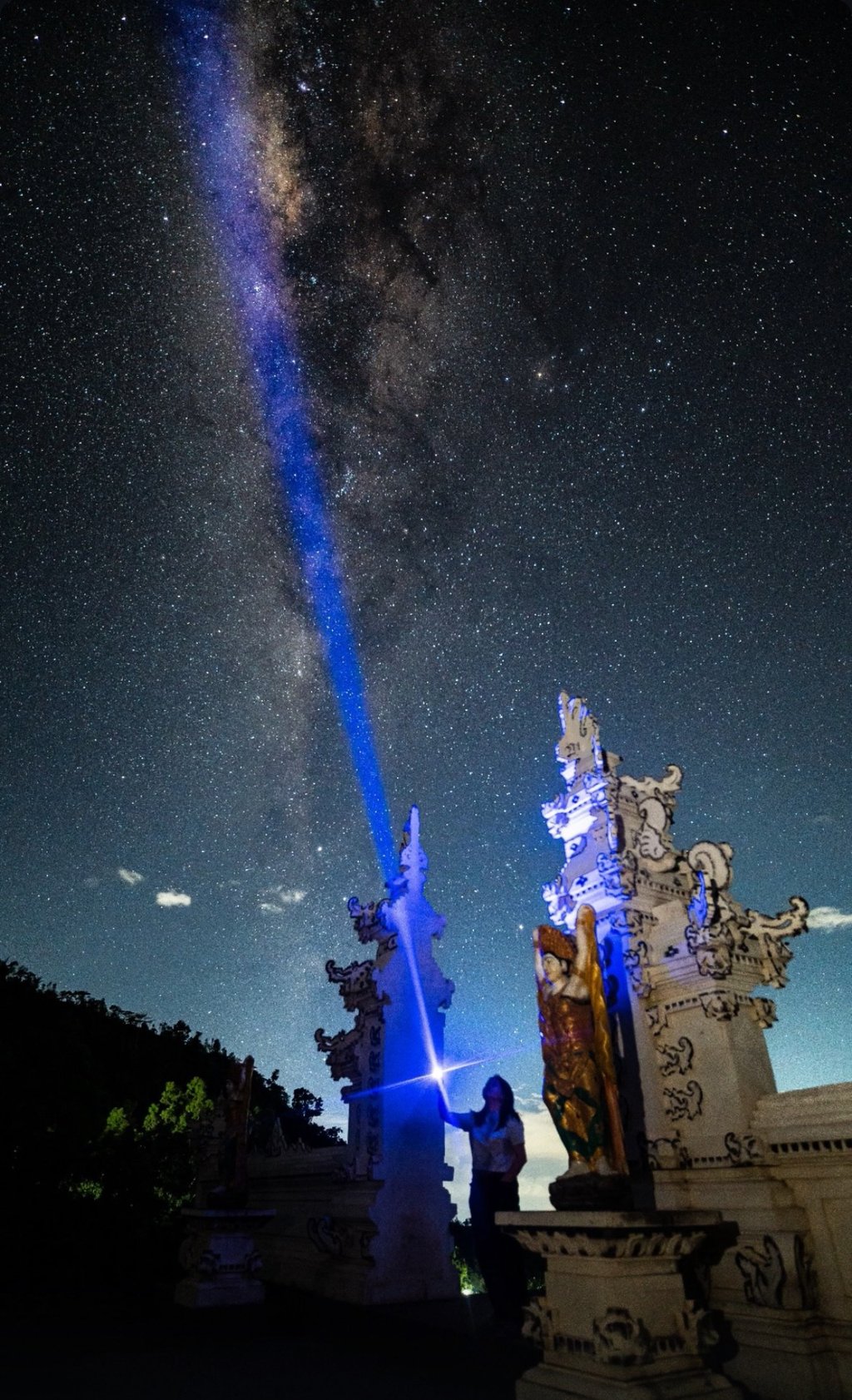

If seeing the Milky Way is on your Bali bucket list, the month you choose can make a significant difference.
The Milky Way is our home galaxy, and its bright central region—known as the galactic core—is the part many people hope to see when stargazing. Although the Milky Way exists in the sky throughout the year, its core is not equally visible during every season or at every hour of the night.
In Bali, May to October is generally the most practical period for planning a Milky Way viewing trip, combining favorable nighttime visibility with the island’s typically drier season.
However, there is no single perfect date that guarantees a spectacular view. Your experience will depend on the month, the time of night, the Moon’s position, local cloud cover, and the darkness of your chosen location.
Why does the Milky Way have different seasons?
Our Solar System is located inside the Milky Way galaxy. When we look toward its central region, we see a denser concentration of stars, gas, and dust, creating the bright band commonly associated with Milky Way photography.
When is the best time to see the Milky Way?
Wondering when and where to see the Milky Way in Bali? With its tropical landscapes and dark-sky locations, Bali offers incredible opportunities to experience the night sky. But seeing the galaxy’s bright core requires more than finding a spot away from city lights. You need to know the best months to visit, the right time of night, and how the Moon and weather affect visibility.
The best time to see the Milky Way in Bali is generally May through October, when the galactic core offers favorable nighttime viewing opportunities and Bali typically experiences its drier season. June through August are particularly worth considering for evening stargazing, although clear skies are never guaranteed.
At Astronomy Bali, we’ve spent countless nights observing the sky, testing locations, and monitoring weather conditions. In this guide, we’ll share our local experience to help you plan your Milky Way Bali adventure, from choosing the right date to finding the ideal viewing window and understanding what you can actually see with the naked eye.
So why can’t we see the galactic core every night? The answer comes down to Earth’s movement.
As Earth orbits the Sun, the direction our nighttime sky faces changes throughout the year. During some months, the galactic core is positioned below the horizon during much of the night. During other months, it rises earlier and remains visible for longer.
Earth’s rotation also makes the Milky Way appear to move across the sky during the night. This is why the ideal viewing window changes not only from month to month but also from evening to evening.
In simple terms: Earth’s orbit determines when the galactic core is visible at night, while Earth’s rotation determines how it moves across the sky during the night.
Is the dry season better for Milky Way viewing?
Generally, yes. Bali’s dry season typically runs from around May to October, making it a practical period for outdoor activities that depend on clear skies. Less rain can mean more opportunities for stargazing, but dry season does not mean cloud-free skies every night. Local weather can vary considerably between coastal areas, inland locations, and the highlands.
The wet season can still offer occasional clear nights, and the galactic core may be visible during parts of the season. However, if your trip is specifically built around seeing the Milky Way, you should allow for flexibility rather than assume any particular night will be clear.
Our recommendation: If your travel dates are flexible, start by considering June, July, or August. Then narrow your choice using the Moon phase, the core’s viewing window, and the weather forecast.
What Is the Best Time of Night to See the Milky Way in Bali?
Choosing the right month is only half the equation. You also need to know when to look.
The Milky Way’s position changes throughout the year, so the best time of night in March is not necessarily the best time in July. For many travelers, this is the detail that makes the difference between spending hours outside without seeing much and arriving when the galactic core is in a favorable position.


March and April: Plan for the early morning
During March and April, the galactic core is generally best approached as a pre-dawn target. That means you may need to wake up in the early hours, travel to your viewing location while it is still dark, and wait for the sky to become suitable. These months can still offer rewarding views, but weather conditions may be less predictable than during the drier months. If you are visiting Bali during this period, check the forecast before making plans and be prepared to adjust your schedule.
May: The transition toward nighttime viewing
May is a useful transition period. The galactic core becomes accessible earlier in the night compared with the preceding months. This can make planning more convenient for travelers who would rather not wake up before dawn. However, the precise viewing window still depends on your chosen date. We would recommend you to use an astronomy app to check when the core rises and reaches a favorable position above the horizon.
June to October: More convenient evening opportunities
From June onward, the galactic core generally becomes available earlier in the night, making evening stargazing more practical. June, July, and August are particularly attractive months to consider. Depending on the date, location, and Moon, you may be able to plan your experience for the evening rather than the early morning.
By September and October, the core’s useful viewing window gradually shifts and shortens. It can still be visible, but you should check the exact timing instead of assuming it will remain high in the sky all night. For travelers who want to combine stargazing with dinner, sightseeing, or other activities during the day, these months can make trip planning easier.
How does the Moon affect Milky Way visibility?
The Moon is one of the most important factors to consider when planning a stargazing night. Even when the galactic core is well positioned, moonlight can brighten the sky and reduce the contrast between the Milky Way and the surrounding darkness. The result is that the galaxy may appear much fainter.
For the best chance of seeing its details, aim for a night when the Moon is below the horizon during your viewing window. A new Moon is often a useful starting point when planning a trip, but the lunar phase alone does not tell the whole story. A crescent Moon may still be manageable if it sets early, while a brighter Moon may affect visibility significantly if it remains above the horizon.
If you cannot travel during a moonless period, do not immediately give up. A darker location and careful timing may still provide a worthwhile experience, although the Milky Way may be less prominent.
How to find the best viewing window for your date
You do not need to memorize the astronomical calendar. A planetarium app can help you plan your night. We recommend Stellarium, which lets you explore the sky for a chosen date, time, and location.
The key takeaway: Do not plan around the month alone. Choose a date when the galactic core is visible at a convenient time, the Moon will not overwhelm the sky, and the forecast gives you a reasonable chance of clear conditions.
If you have only seen the Milky Way in photographs, your first real-life encounter may look different from what you expect.
Long-exposure images often show a bright, colorful band filled with intricate dust lanes and dense star fields. To the naked eye, the Milky Way usually appears much subtler: a faint, milky band stretching across the sky. You might initially mistake it for a thin cloud. But under dark conditions, you can begin to recognize its structure and the concentration of stars toward the galactic center.
What Does the Milky Way Actually Look Like to the Naked Eye?
Why do photos look more colorful than reality?
A camera can collect light over an extended exposure, recording details that our eyes cannot easily perceive in a brief glance. Photographers can then process their images to reveal faint structures and colors. Human vision works differently. In low light, our eyes become less sensitive to color, so the Milky Way generally appears much less colorful than it does in a processed photograph.
That does not make the real experience less impressive. Seeing the galaxy above you, knowing that its light comes from countless stars within our own galaxy, can be extraordinary in its own right.
Give your eyes time to adjust
When you arrive at a dark-sky location, avoid looking at bright phone screens or lights unnecessarily. Your eyes need time to adapt to darkness. Initial adjustment happens relatively quickly, but fuller dark adaptation can take around 20–30 minutes and sometimes longer. During this time, you may begin to notice fainter stars and more structure in the Milky Way.
You can also cup your hands around your eyes to help block nearby stray light when observing. The effect is not the same as using binoculars, but it may help reduce distractions from surrounding lights.
Do you need a telescope to see the Milky Way?
No. You can observe the Milky Way with your naked eyes, provided the sky is dark and the conditions are favorable. Telescopes are useful for exploring individual celestial objects, such as star clusters, nebulae, and distant galaxies. But when the goal is to appreciate the Milky Way as a broad band across the sky, dark surroundings and good visibility are more important than magnification.


How to Prepare for a Milky Way Stargazing Night in Bali
A little preparation can make your night more comfortable and help you spend more time enjoying the sky.
Choose your location carefully
Look for a place with relatively dark skies, a safe viewing area, and practical road access. A remote location is not automatically the best choice if it is difficult to reach or the surrounding terrain blocks your view. For a more detailed breakdown of recommended areas, read our guide to the best places to stargaze in Bali.
Mount Batur is one option for travelers looking for a mountain setting and an adventurous experience. Hiking and jeep excursions offer different ways to explore the area, but the effort, terrain, and crowds should all be considered when planning.
Wherever you go, respect local customs and private property. Bali is a deeply spiritual island, and you should seek permission before entering or photographing at temples and other culturally significant places at night.
Arrange transport in advance
Some dark-sky locations are remote, and e-hailing services may be difficult to find late at night. Plan your return journey before you leave. If you are visiting a mountain area or an unfamiliar location, consider arranging a driver or transport service in advance rather than assuming you will be able to find a ride when the session ends.
Bring a few essentials
Use this checklist before heading out:
Flashlight: Useful for navigating in the dark. Keep it pointed away from other observers and avoid unnecessary bright light.
Insect repellent: Particularly helpful in tropical outdoor environments.
Tripod: Essential if you plan to take long-exposure photographs with a camera or a compatible phone.
Closed shoes: A practical choice for uneven ground and outdoor trails.
Light jacket or extra layer: Wind and exposure can make some locations feel cooler than expected.
Fully charged phone: Useful for navigation, astronomy apps, and photography.
If you plan to photograph the Milky Way, a smartphone with a suitable night mode or long-exposure feature may be enough to get started. Keep expectations realistic: results depend on the device, the settings, the darkness of the sky, and your ability to keep the phone steady.
For more detailed settings and techniques, see our dedicated Milky Way photography guide when available.
Consider a guided stargazing experience
Planning a successful night involves more than finding a dark location. You also need to coordinate the timing, check the Moon, monitor the weather, choose a suitable viewing area, and understand what you are looking at. A guided experience can make those details easier to manage, especially if you have limited time in Bali or are new to astronomy.
At Astronomy Bali, we bring together modern astronomical observation and stories about how people in Bali have understood and related to the night sky. Our aim is to help guests become astronomers for a day—not simply look through a telescope, but develop a deeper appreciation of the universe above them.
Our private stargazing experiences are designed for travelers who want to explore the night sky with guidance, whether they are couples, families, photography enthusiasts, or complete beginners.


The Milky Way has been shining above Bali for millions of years. With the right timing, a little preparation, and a clear night, you may get to see it for yourself.
So check the Moon, watch the forecast, and look up. Your next unforgettable Bali memory might be written in the stars.
Clear skies, and see you under the stars! ✨